After many years since the space program started, the thought of colonizing space looked like it would never happen in our lifetime. Although it is hard to tell how long it will truly take, a company called planetary resources looks to be the next step along to colonizing space. This company is intending to start by mining resource rich asteroids near earth that are easy (in terms of travelling through space) to reach. As time goes on, as well as if the company survives, then further resource rich asteroids can then be mined.
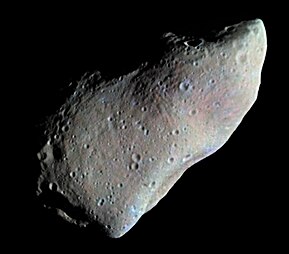
These plans will not happen anytime soon, and before any mining can happen the asteroids have to still be discovered. The company is currently working on that by launching 2+ orbital satellites into space to be used to find nearby asteroids. Next, mapping probes are to be launched in 5-7 years to any of those asteroids that look promising. An unspecified time after, the equipment will begin do to its work actually mining the asteroids. Since the company is relatively new and is a pioneer in this field, only time will tell to see when things actually begin to develop.
A very large hurdle to this plan is the upfront costs of designing and creating the satellites, probes and mining equipment, as well as the massive cost to actually get the equipment into space via rockets. Seeing as it has taken many years and billions of dollars to get the International Space Station there, this will not come cheap. The large amount of initial investment is likely why there are no companies there now, as well as the long length of time it takes to find, explore and finally mine the asteroids and any money begins to be earned. Although it is very expensive, a large asteroid can have very dense deposits of rare earth metals that fetch $1000's per ounce, as well as allowing for more common metals to be used in the construction of space stations or satellites while in orbit. These could make the high initial costs worth it, as well as driving down the cost of exploration and expansion in orbit and further as existing materials will already be in space.
Another big hurdle which is still slowly being uncovered and if lucky will sort itself out, is the legality of mining in space where no country has territory and is considered part of "the commons." The problem is that no country can claim territory in space, so who the asteroid belongs to is in question. As well, the 1967 Outer Space Treaty states "The activities of non-governmental entities in outer space, including the Moon and other celestial bodies, shall require authorization and continuing supervision by the appropriate State Party to the Treaty." Since they are an American company, that means that if anything goes wrong, the United States is on the hook for the costs of any cleanup as well as any accidents that happen. This likely will lead to the government forcing the company to take out some kind of insurance to make up for any costs, as well as the government being required to supervise the company once it is in space.
The reason this interested me is less because of my interest in mining and business, but the potential this can have for the future of space development and colonization. The United States government has poured tons of money into exploring space for the last few decades, but nothing spurs development and lots of investment like the potential to earn money, which now looks like it is closer within reach.
Since the resources are already in space and no rockets/fuel is needed to bring more common materials in space, those common metals taken from the asteroid (like nickel and iron) could be refined and used directly in space, allowing for the cheaper construction of new space station and equipment. This is the first step in rapidly expanding the accessibility of space as well as saving lots of time, since people can have somewhere to work/live in space if air and water are brought up.
Although Planetary Resources is still in it's early stages of development, the potential of bring more investment to space cannot be ignored. Although there is little up there yet. this could be a stepping stone to much bigger things.
As well, the way the Earth is being treated now and the many events that could wipe out life, it is always nice to have a backup plan out of this world just in case.


 My Awesome Drawing